Are Newborn Babies Real in Call the Midwife
Terri Coates is a practicing midwife and lecturer and serves as the Midwifery Adviser to Telephone call the Midwife.
Editor's Note: The opinions expressed in this blog post are solely those of the author.
Spoiler Alert: This post discusses events in Call the Midwife Season half dozen Episode 8
The last episode of Call the Midwife season half-dozen brought together contraception, birth, marriage and a death in an emotional series finale. Barbara's wedding preparations included a visit to secure a contraceptive cap and a more challenging story about a young mother taking the oral contraceptive pill and then succumbing to a deep vein thrombosis. The contraceptive pills used in the 1960s had very dissimilar formulations compared to the modern equivalent. They contained very loftier levels of hormones and consequently, the risks were much greater.
The nativity of Shelagh's baby has been predictable for almost the entire series and nosotros watched the bump expand. Merely get-go, the labor.
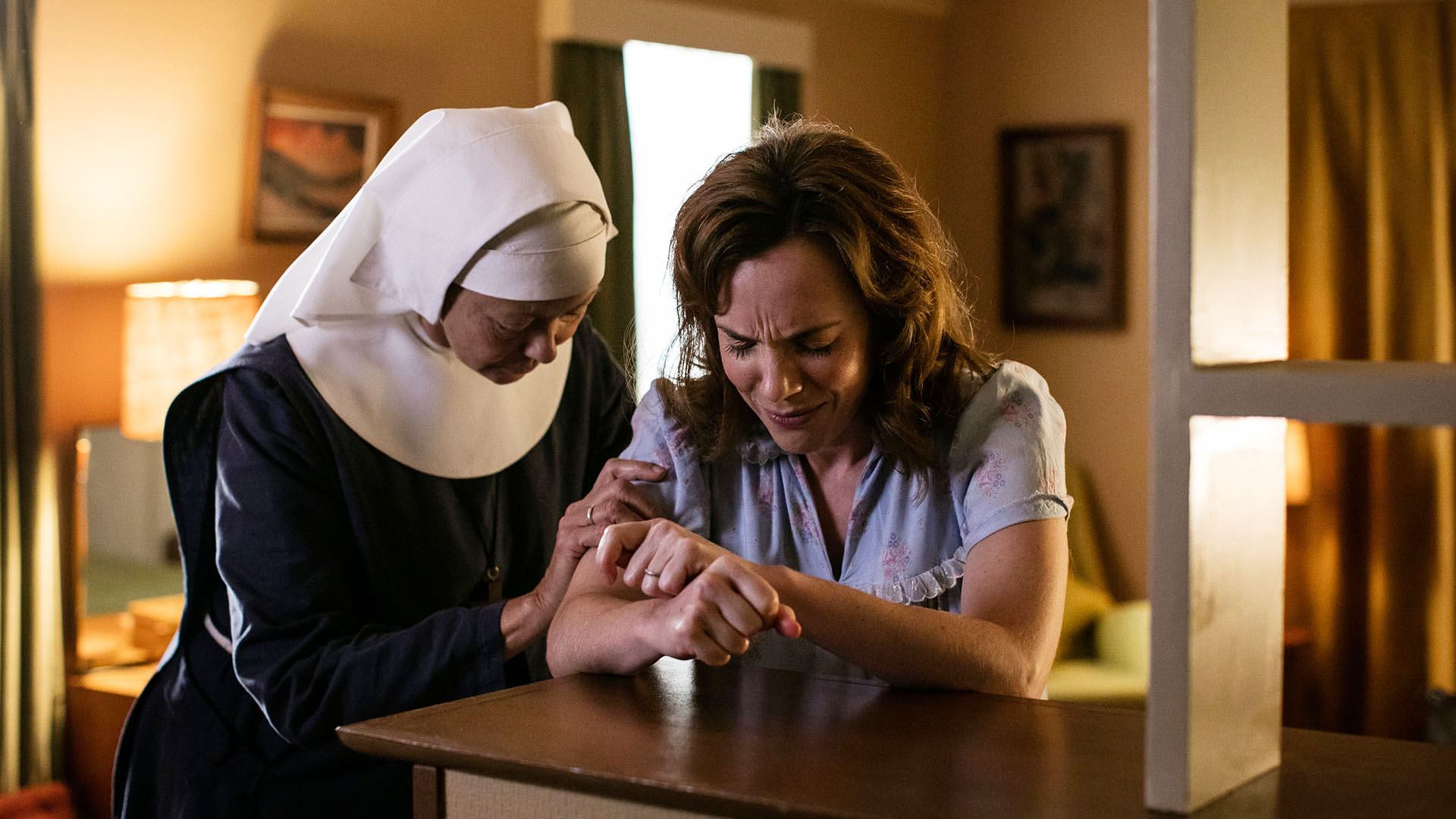 Demonstrating the progress of a long labor within an hour long episode doesn't necessarily brand for a riveting cease of season finale and isn't what fans want, though I doubtable it is what people who don't usually lookout Telephone call the Midwife think nosotros do. The progress of a labor tin only exist seen in brusk scenes woven into the other stories depicting the highs and lows.
Laura Main, who plays Shelagh, was dandy to portray her character's pregnancy and labor authentically, then we took the time to rehearse body language and comfort positions that a meaning woman might adopt day to day and the discomforts of pregnancy. For this episode particularly, we worked through the sensations and levels of pain her character might experience in a long labor. Rehearsals continued on gear up until just before each scene was filmed.
A circuitous labor and birth may make for a dramatic screenplay, just as midwives and mothers know, non all labor is dramatic: it's mostly just plain exhausting. And so advising the author to portray a long, tiring, bluntly unglamorous, normal labor may seem unlikely, merely when creating Call the Midwife, the team portrays difficult stories on screen every episode.
For Shelagh nosotros wanted to bear witness normal progress of labor of an older primigravid (beginning time) mother when the baby is believed to be in a posterior position. This is likely to exist a long and uncomfortable labor. Midwifery colleagues understand that those providing care may also get drawn.
Constrained by a film set and only a few minutes to draw each phase, we see Shelagh become aware that she's in the early phase of labor and phone call her chosen midwife. Sis Julienne arrives and confirms that Shelagh'due south midwife'southward instincts were correct, the labor is underway and the babe is probably in a posterior position. That's sufficient to make whatever midwife desire to get and have a petty preparatory nap.
The labor progresses, and as the strength and length of the contractions are evident, so as well is the desire for comfort. Sister Julienne provides homo contact and encourages upright positions. Labor isn't e'er like shooting fish in a barrel and we know some mothers will require pharmacological support. The choices and then were few, but in the UK, a midwife would deport Pethidine and Nitrous Oxide (gas), and we see all options in use, and the side effects, in Call the Midwife.
Watching Sister Julienne help Shelagh maintain sufficient stores of energy and a positive outlook demonstrates textbook levels of midwifery care. We run into the advisable use of pain control, the use of physical support and upright positions to aid rotation and descent and singing to control breathing and release endorphins. All of the techniques described are demonstrated in short scenes, and I advise the author and director on advisable midwifery to portrayal.
 For 1962, the singularly unusual act of bringing the begetter into the room to support the mother though the second stage of labor is also demonstrating that practice changes.
Actresses who portray labor well make me forget where I am, and I have the urge to be beside them when in the throes of a contraction. Unlike real labor, when the managing director says "Cut!" they non only stop 'contracting' but may fifty-fifty remove their abdomen too.
Back on the real labor ward I do occasionally wish that I could say "cut" to requite the woman a suspension, or if they haven't had the labor or birth that they might have chosen, do another take to get the perfect nativity. Call the Midwife doesn't go in for perfect births, simply often portrays birth in poor weather using physical and emotional support with the basic methods of pain command that were bachelor in the early 1960s. We show that nascency is normal, it isn't a medical condition needing treatment, it'due south a normal physiological process and the midwives diagnose problems and refer for aid when needed. Women at the time were quite used to relatives, friends and neighbors giving nascence at home attended just by a midwife.
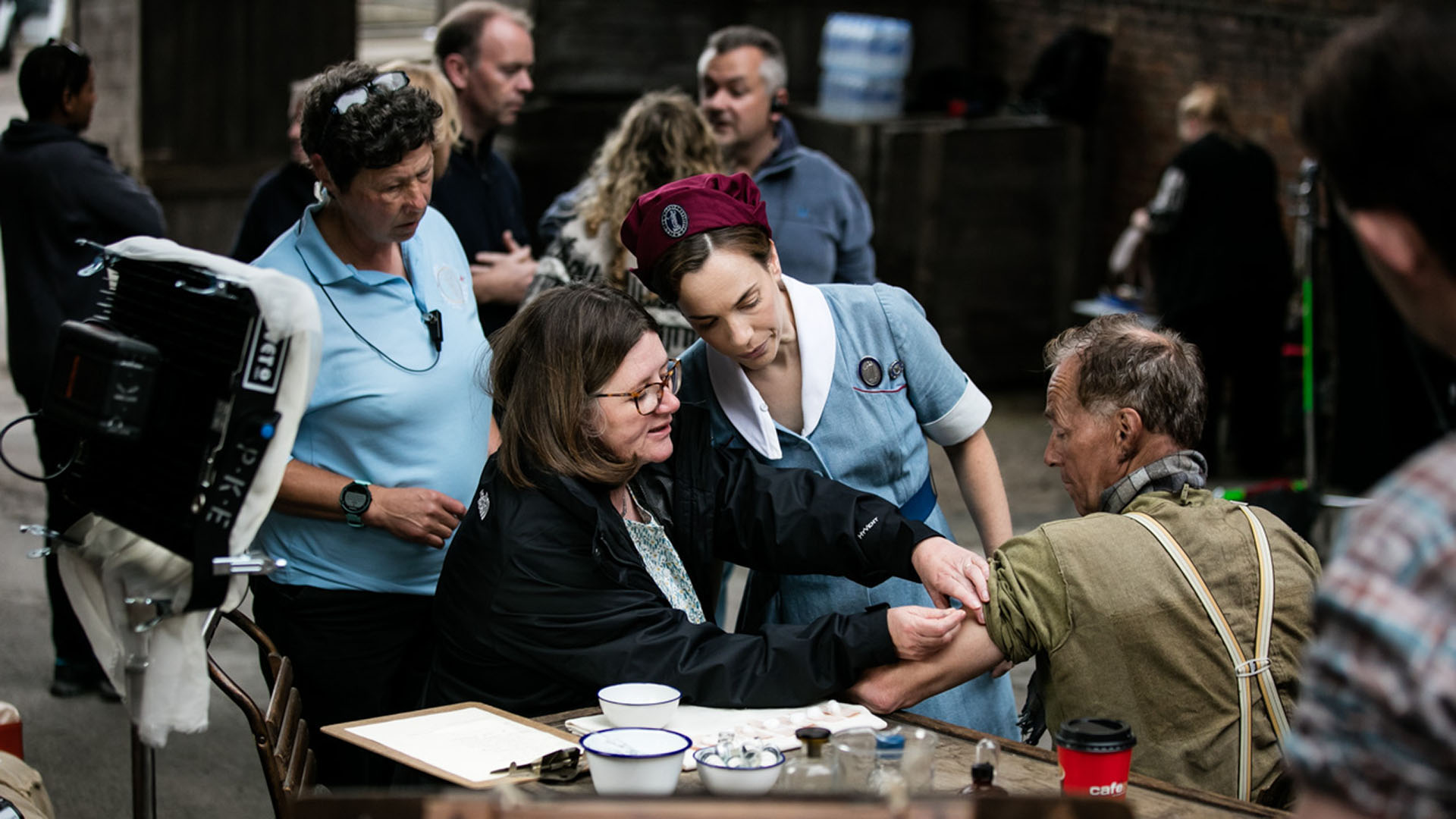
A nascency on the the set is rehearsed using a doll, then filmed with a prosthetic baby. When a real baby needs to be seen I bring a infant to the ready after explaining the process to the parents and answering all their questions. The parents and chaperone watch shut past and the babe calmly and quietly replaces the prosthetic and then filming can go on. I stay equally close as possible which invariably ways a very modest space abreast the bed, my arms hidden under the covers holding the baby in position. Babies are very well treated and often sleep through the whole scene. We don't wake them or make them cry, they are never more than than a few feet from their female parent and are returned as before long as possible. Their working hours are strictly regulated, and they are never on set for more than a few minutes at a time.
One side-effect of the show that has been a surprise to me is the effect on viewers. Two viewers that we have heard about have accidentally delivered babies and said that they learned what to do and weren't frightened because they had watched Call the Midwife. Equally a midwife, I'chiliad delighted that women have been successfully supported at the point of giving birth. I'thousand also a petty disconcerted that people are learning midwifery skills from the show! But if we are helping women to have conviction that birth is invariably normal and not a medical procedure, and so I'thou delighted.
Call the Midwife is now filming season seven, which volition bring a new and exciting set of challenges.
Source: https://www.pbs.org/call-the-midwife/blog/what-its-like-to-stage-a-birth-in-call-the-midwife
0 Response to "Are Newborn Babies Real in Call the Midwife"
إرسال تعليق